$600 Fullstack Live Event Free With a Membership!
The PHP Security Boundary Is Expanding
Protect Your Dependencies, Strengthen Vulnerability Detection, and Keep Control of Your AI Tools
Live on October 28, 2026 | 10:30 - 15:30 CET
Days
Hours
Minutes
Seconds

PHP Security Beyond Your Application Code
Modern PHP security reaches far beyond the code you write yourself. Third-party dependencies, supply-chain risks, and AI-assisted security tools are expanding the boundaries that development teams need to protect. Composer is introducing stronger mechanisms for blocking vulnerable or malicious packages directly during dependency resolution, while LLM-based security analysis is changing how vulnerabilities are discovered and reported across the PHP ecosystem.
At the same time, AI development tools introduce new privacy, security, legal, and compliance risks. From IDEs and code assistants to MCP servers and CLI tools, sensitive code and secrets can move through systems that developers do not fully control. This event explores these changing security boundaries from three practical perspectives: securing the PHP supply chain, improving vulnerability detection with LLMs, and keeping control over AI development tools.
Three Perspectives on Modern PHP Security
The three sessions examine how PHP security is evolving across dependencies, vulnerability analysis, and AI-assisted development. From Composer’s new supply-chain security mechanisms to the PHP Foundation’s work on LLM-generated security reports and practical strategies for controlling AI tools, the event focuses on concrete risks, lessons learned, and ways to strengthen security without losing the benefits of modern development workflows.

Your expert sessions
10:30 - 11:15 | Supply Chain Security in the PHP Ecosystem | Sebastian Bergmann
Modern PHP applications depend on extensive third-party package ecosystems, making the software supply chain a critical security boundary. This session explores how recent Composer versions move advisory enforcement directly into the dependency resolver, replacing older approaches with mechanisms that can also handle malware flags, policy rules, and future security signals. Learn where advisory data comes from, how resolver-level blocking works, and what the new defaults mean for application developers and maintainers.
11:45 - 12:30 | Securing PHP in the LLM Age | Volker Dusch
LLM-based security analysis is generating an increasing number of vulnerability reports for PHP libraries and projects. This session looks at how the PHP Foundation’s Ecosystem Security Team is responding to this challenge, drawing on findings from models such as Fable/Mithos. Discover what the team has learned, how LLM-generated reports can be evaluated, and how the PHP ecosystem can benefit from AI-assisted security analysis.
14:45 - 15:30 | PrAIvacy – Privacy and security in AI tools | Marcus Bointon
AI tools are becoming part of every layer of development, from Figma and IDEs to MCP servers and CLI tools. This session examines where code and sensitive data can go, what happens when AI acts autonomously, and the resulting security, legal, ethical, and compliance risks. It also covers local LLMs, vibe coding and de-skilling, and practical ways to assess, control, and mitigate these risks.
Expert Knowledge for
PHP developers who want to better protect their applications and dependencies.
Maintainers dealing with growing numbers of LLM-generated security reports.
Security engineers evaluating new approaches to vulnerability detection.
Development teams using AI-assisted coding and security tools.
- Technical leaders responsible for security, privacy, and compliance.


Join us and learn how to...
strengthen your PHP software supply chain with modern Composer security mechanisms.
understand how LLM-based security analysis is changing vulnerability detection.
evaluate and respond to growing numbers of AI-generated security reports.
identify privacy, security, legal, and compliance risks in AI development tools.
- keep better control over code, data, and AI-assisted development workflows.
Get to know our experts

Sebastian Bergmann
The PHP Consulting Company
Expert in: PHP, software quality, testing, and development tooling.
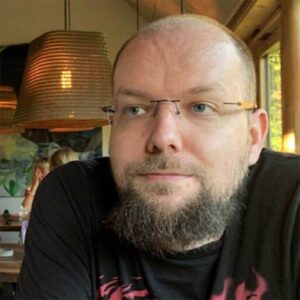
Volker Dusch
The PHP Foundation
Expert in PHP security, vulnerability analysis, and ecosystem security.

Marcus Bointon
Radically Open Security
Expert in PHP, security, privacy, and developer tooling.
SDN/FutureTech Membership
Individual Membership
€
7
50
Monthly -
30% off on your FutureTech Ticket
-
Access online Live Events for free
-
Access to our Magazine, Video Tutorials & Courses
-
6 month access to your conference recordings
-
Printed magazine 4x a year
Start Now
billed annually
Frontmania Membership
Individual Membership
€
7
50
Monthly -
15% off on your Frontmania Ticket
-
Access online Live Events for free
-
Access to our Magazine, Video Tutorials & Courses
-
6 month access to your conference recordings
Start Now
billed annually